Hi there! I was a researcher at METR, evaluating AI’s autonomous capabilities. Here is some of my research. Previously, I was an AI engineer & first hire at an ML infrastructure startup, and studied EECS at Berkeley.
I was diagnosed with a benign brain tumor (prolactinoma) in 2025 and underwent two surgeries. When I faced debilitating fatigue during recovery, I used AI to make sense of information scattered across records, lab results, symptoms, and daily life. I believe everyone can improve their care with AI; the missing link is patient awareness and AI literacy. I shared my experience in an essay that reached 800k+ people and on the OpenAI Forum.
AI research and engineering remain central to my work. Alongside them, I am exploring a small number of projects with patients, families, and organizations to build custom intelligence systems for complex care, and to create AI education content for a broader audience.
Exploring AI for health intelligence
The problem
Complex medical care is also an information-management problem. Records scatter across portals, PDFs, emails, appointment notes, caregivers, and family members; daily observations are difficult to compare over time; and a new specialist may have only a short window to understand the case. AI makes it much easier to create a patient-side source of truth. The harder work is deciding what to collect, connecting it reliably, keeping it current, and turning it into something patients, families, clinicians, and advisors can actually use.
How I work
I help families consolidate medical records, notes, communications, and caregiver observations into one system, so that:
- A new expert can understand the case before a short consultation, and family members stop reconstructing the history from scratch
- Caregiver observations become trendable rather than anecdotal, and important changes don’t get lost across portals and inboxes
- The family can answer, “What changed this week, and what should we ask the care team?”
This can extend to custom tracking for symptoms, nutrition, sleep, activity, mobility, or mood, and to research agents that monitor clinical trials, publications, and community forums for the patient’s situation.
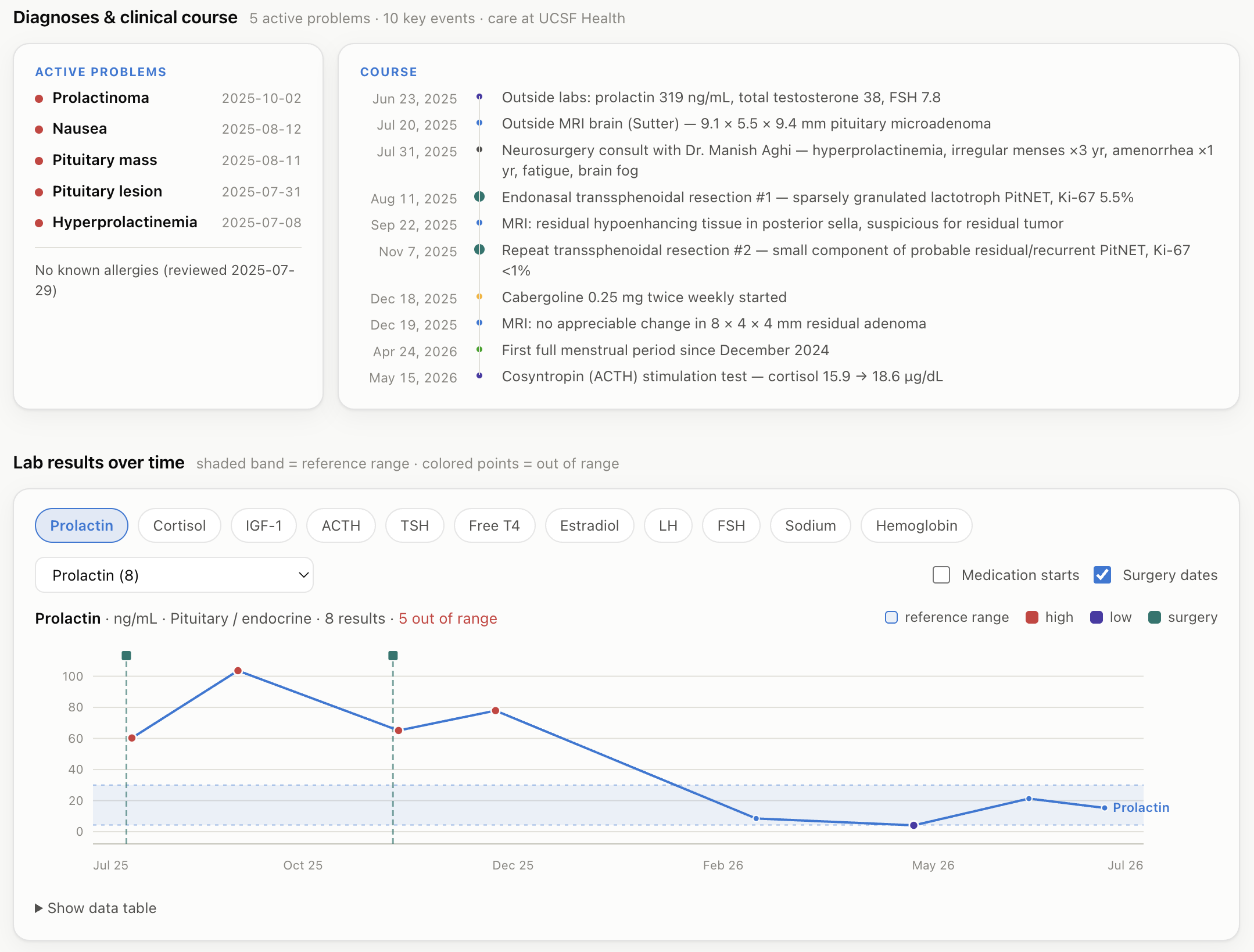
Anonymized case study
In a current project for a cancer patient, I set up automatic syncing for EHR records, expert meeting transcripts, and a redesigned home health aide report covering intake, activity, and abnormal neurological and physical events, all visualized on a private site. What changed:
- Remote physicians and medical fiduciaries use the site to stay current between visits
- Daily reporting corrected a false assumption that the patient’s eating had improved — breakfast was the only meal consistently eaten
- Trends in neurological reporting helped deprioritize additional surgeries as a treatment option
- Having deliberate data sharpened which non-clinical metrics the team watches next
Who this is for
This tends to help when a patient is navigating a complex or information-intensive condition, information is spread across multiple systems and people, several specialists or organizations are involved, and the family is actively making decisions.
I do not diagnose conditions, recommend treatments, or replace licensed clinicians.
Expression of interest
I am currently at capacity and am not looking to start an engagement immediately. However, I’d love to hear from you if you’re a patient or a family interested in future support.
I also welcome inquiries from organizations interested in referring patients or families who may benefit from this support; speaking, technical education, or content collaborations; consulting or contract work.
Submit an inquiry